OpenAI's Control Room can stop research model output within 35 seconds
4 min readBy W. Soares
OpenAI described Control Room, a central check on every research inference request that halts a job's model output within 35 seconds and fails closed if it goes down.
OpenAI has described Control Room, an internal system that tracks model workloads across its research infrastructure and can stop them when safety or security concerns come up. According to OpenAI, it halts model output within 35 seconds of a decision to stop or pause a job.
The system covers research, not ChatGPT or the API. OpenAI says its external model-serving stack is already more centralized and has its own established process for taking deployments down quickly.
What does Control Room cover?
OpenAI says Control Room connects every research inference workload, including agentic sampling for model training and evaluation, data processing and other jobs. It works alongside the company's misalignment monitoring systems, and it is already deployed across the research infrastructure.
One policy detail stands out: OpenAI says it requires every research workload that does agentic inference to be associated with an approved safety case.
How does it work?
OpenAI breaks the design into three parts:
- The workload: the job a researcher runs, such as a reinforcement learning experiment, an evaluation, or a high-volume sampling or data-processing job.
- The inference engine: the software running the model on GPUs. One workload can use several engines, and one engine can serve several workloads.
- The Control Room service: a central registry that tracks jobs and decides whether each one may keep generating output.
The flow, as OpenAI describes it:
- A new job requests a
job_idfrom Control Room, which ties it to an approved safety case. - Each time the job wants tokens from a model, it sends the request to an inference engine along with the
job_id. - Before answering, the engine asks Control Room whether that job is still authorized.
- If a person or a monitoring system has stopped the job, Control Room denies the request and the engine returns a refusal instead of model output.
The job's own code can keep running. It just cannot get any more output from any model on any engine.
Why put the kill switch in the inference layer?
OpenAI's argument is about where the checks can be trusted. Workload code is owned by individual researchers, changes often and varies widely, so the company says it is "not an ideal place to implement critical load-bearing safety protections." There are only a few inference code paths across OpenAI research, and they are deployed uniformly. That makes the inference layer a bottleneck every request has to pass through.
OpenAI says it also runs continual agentic and programmatic sweeps to catch engines launched with Control Room missing or disabled, whether by accident or on purpose.
What happens if Control Room itself fails?
The engines are configured to fail closed. If the Control Room service goes down, through a system error, deliberate disabling or tampering, all inference requests are denied until it is back. OpenAI says fail-closed is already live for all frontier model research workloads and will reach the remaining research workloads over the next few days.
Where does the 35 seconds come from?
The 35 seconds is the maximum time between Control Room receiving a stop instruction and the point where the job can make no further progress. OpenAI says the delay comes from a caching layer for inference authorization, needed to handle the volume of traffic, and that it is working to bring the lag down to zero.

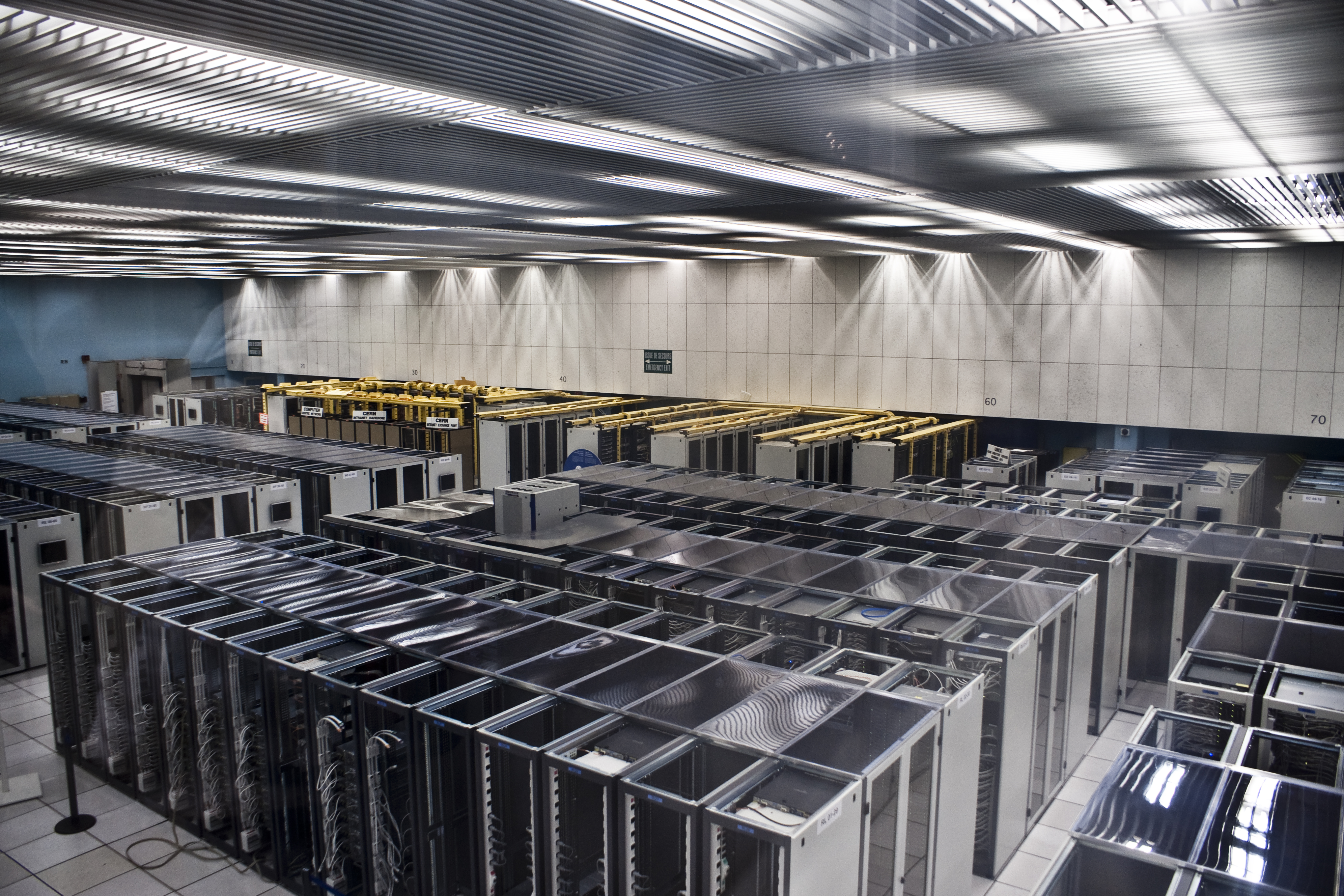
Image: Server racks in a data center, shown for illustration. Photo by Victor Grigas via Wikimedia Commons, CC BY-SA 3.0.
How does it connect to monitoring?
OpenAI says all of its frontier reinforcement learning jobs run with a monitor, a separate model that inspects what the model being trained is doing and raises alerts. Depending on severity, the monitoring system can tell Control Room to stop a job directly, and the next inference request from that job is denied. OpenAI cites a recent DNS-related incident that was caught by a monitor.
What this does and does not tell us
The post describes the architecture and OpenAI's own performance claims. It does not include an outside audit, data on how often jobs have been stopped, or details on how the safety cases are reviewed. The 35-second figure and the fail-closed rollout are company statements.
Takeaway
Control Room is a central authorization check on every research inference request at OpenAI, designed to stop a job's model output within 35 seconds and to stop all research inference if the check itself goes down.
Takeaway: The design moves the safety stop out of researcher-written code and into the shared inference layer, where OpenAI says it can enforce the check on every request.
Sources
- Control Room: A central system to track and stop model workloads across our research infrastructure: OpenAI
Cover image: Servers at CERN, shown for illustration. Photo by Florian Hirzinger via Wikimedia Commons, CC BY-SA 3.0.
By W. Soares
Educational content only. Nothing here is investment advice.