Riemann proof check: Claude-assisted claim passes most Lean tests, final run pending; a human-only proof needs major revision
4 min readBy W. Soares
MIT's Andrew Sutherland reports kernel checks pass on Levent Alpöge's Lean proof but the comparator run is pending. Separately, Alessandro Masullo's 940-page human proof is under major revision.
The claimed proof of the Riemann Hypothesis from Anthropic mathematician Levent Alpöge and Claude has passed most of the machine checks run by independent mathematicians. It is not yet confirmed. MIT's Andrew Sutherland is running the checks and posting results publicly. His page was last updated 2026-11-21 at 09:30 UTC (6:30 a.m. BRT), and it still said that as of our check at 10:42 UTC (7:42 a.m. BRT). It reports that kernel checks have passed but that the end-to-end comparator run is still in progress. Meanwhile, a second, human-written claim has appeared, and its own reviewers say it needs major revision.
Yesterday's post on the original claim: Anthropic mathematician claims Claude-assisted proof of the Riemann Hypothesis.
Where the Lean checks stand
According to Sutherland's verification page as of 09:30 UTC:
- Passed: all 175,187 Lean modules compile with zero errors. The five headline theorems rely only on Lean's three standard axioms (
propext,Classical.choice,Quot.sound). Lean's own kernel replayed every module with zero rejections. - Independent checkers accept it: two separately written kernels, nanoda and con-leche, accept the full exported proof, and lean4lean accepted every module. con-leche's statement-comparison mode confirms all five theorems match the "challenge" statements.
- Still running: the official
lake comparatorend-to-end run, and a replay of the export through Lean's default and "paranoid" kernels. In one comparator run, statement comparison and the axiom check had already passed, but the kernel stages hadn't finished.
Why the comparator matters: Imperial College London's Kevin Buzzard wrote on the Lean community chat, as quoted by Scientific American, that it checks the code does not "redefine the meaning of any of the symbols in the statement." In paranoid mode, it also checks that the proof compiles with several independent kernels, so it isn't exploiting an unknown Lean bug.
Sutherland told Scientific American: "Honestly the chance that anything is fishy here is approximately zero." His page also notes that results hold on the assumption that the kernels and Mathlib's definitions are as intended.
One scope detail: Sutherland's page says the proved statement uses Mathlib's own definition of the Riemann Hypothesis, and that "GRH" in this submission means Dirichlet L-functions only, a narrower version of the Generalized Riemann Hypothesis.
Human reactions are more mixed
- James Maynard, Fields Medalist at Oxford, to Nature: "If this fully checks out, it is clearly a historic milestone in mathematics."
- Andrew Granville of the University of Montreal told Nature that Alpöge's four-page document, which includes a sketch of the proof, is "garbled." He said Alpöge should have prepared a clearer write-up and questioned the timing, days after Anthropic's IPO. Alpöge wrote in the document: "There is an obvious cynical view, to do with the timing, but it is false."
- Anthropic did not respond immediately to Nature's request for comment.
The human-only claim
Hours after Alpöge's announcement, Stanford's Ravi Vakil, president of the American Mathematical Society, posted a 940-page draft by Alessandro Masullo, a young mathematician at Stanford. It's a proposed proof of the Generalized Riemann Hypothesis written without AI. Stanford's Brian Conrad, who has been giving Masullo feedback for months, confirmed the blog post's details to Scientific American.
Conrad was careful about the status. "To judge the success of the method requires the paper to reach a stage of more final revision," he told Scientific American. "It's undergoing major revision." He described the choice to post now as one between "two unpalatable options."
The draft is unfinished by its author's own account. The volunteer Lean formalization project on GitHub notes that Chapter 13, which is meant to derive GRH from the paper's trace formula, doesn't yet state its main theorem. The same project says concerns about gaps in the main theorem have been raised on the Lean Zulip chat, though the details haven't been posted. There's no Lean version of the full argument.
Human vs. AI: a different kind of check
The two claims show how differently each gets checked. Alpöge's has machine-checkable code but no human-readable proof. New Scientist reported that he said an unpublished version ran past 250,000 pages. Masullo's is a human-readable manuscript that people must referee by hand, which typically takes much longer. The Lean route can deliver a machine verdict in days. Understanding the ideas, and Clay Mathematics Institute recognition, which requires at least two years of scrutiny, are slower for both.
Takeaway
The AI-assisted proof has passed every machine check completed so far, but the final comparator run was still pending as of Sutherland's 09:30 UTC update, so it is not confirmed. The human-only claim is a draft its own reviewer calls under major revision. Next to watch: the comparator result on Sutherland's page.
Sources
- RH Lean proof: verification files: Andrew Sutherland, MIT, last updated 2026-11-21 09:30 UTC (checked 10:42 UTC)
- Mathematician says he and AI solved Riemann hypothesis: Nature, November 20, 2026
- The AI Riemann hypothesis proof is almost certainly true, independent mathematicians attest: Scientific American, November 20, 2026
- Dueling claims of Riemann hypothesis proofs emerge: Scientific American, November 20, 2026
- riemann-masullo formalization project: GitHub
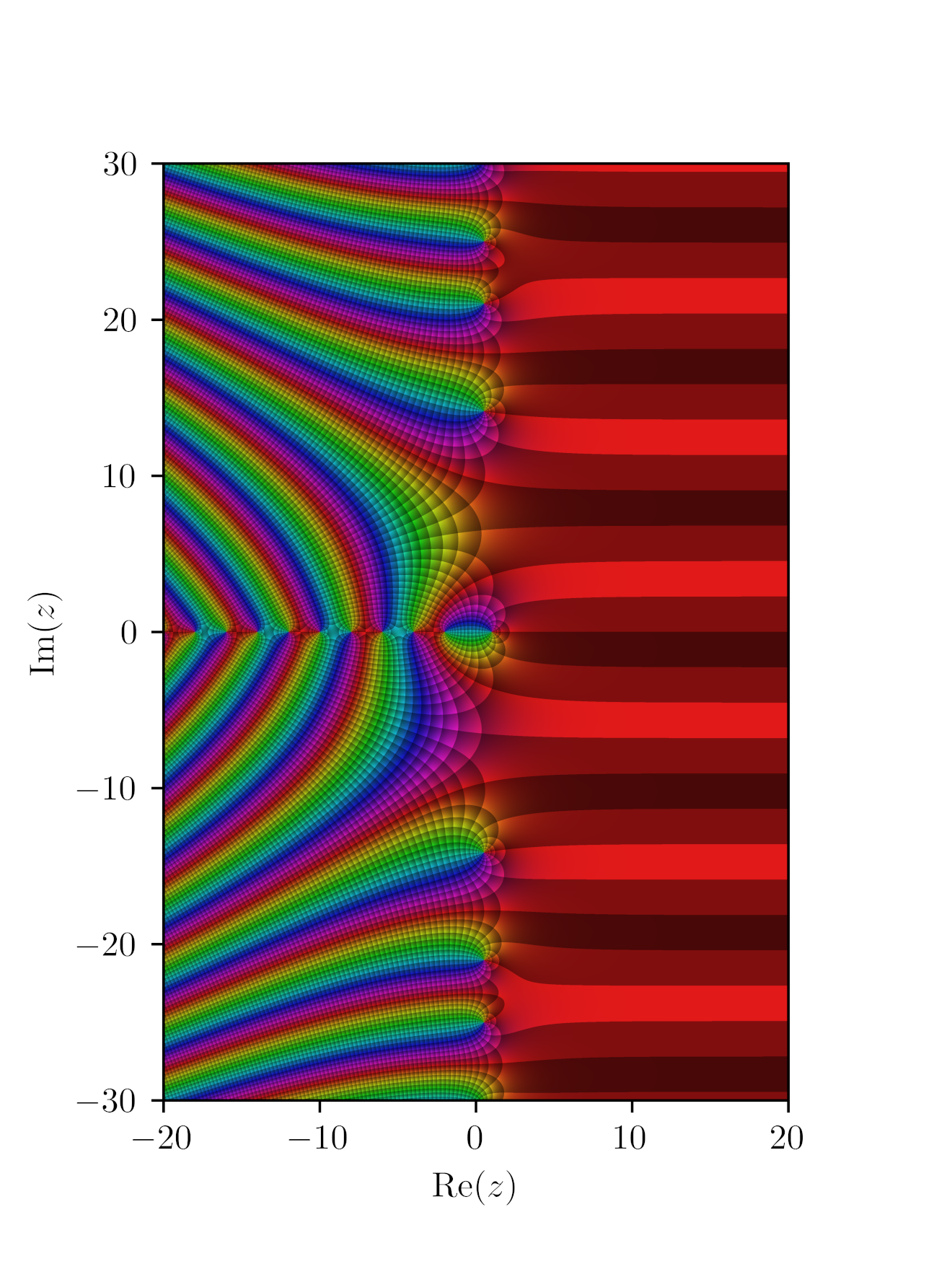
Cover image: A plot of the Riemann zeta function. Image by Empetrisor via Wikimedia Commons, CC BY-SA 4.0.
By W. Soares
Educational content only. Nothing here is investment advice.