Anthropic mathematician claims Claude-assisted proof of the Riemann Hypothesis: what Lean can and can't verify
5 min readBy W. Soares
Levent Alpöge says he and Claude proved the Riemann Hypothesis and its generalization, releasing a Lean proof. It's unverified and not accepted by the Clay Institute. What Lean checks, and its limits.
Levent Alpöge, a mathematician who works at Anthropic, says he and Claude have proved the Riemann Hypothesis, along with its broader version, the Generalized Riemann Hypothesis. He posted the claim on Friday, November 20, with a proof written for the Lean proof assistant. This is a claim, not an established result. It has not been independently verified, and the Clay Mathematics Institute, which offers $1 million for a solution, has not accepted it. As of 3:55 p.m. BRT (1:55 p.m. ET), Anthropic had not commented. The Verge said the company did not immediately respond and has not involved itself in the announcement.
What Alpöge claims
"I believe I have, working with Claude, discovered a proof of the Riemann Hypothesis," Alpöge wrote on his website. He said the method "easily extends much further," resolving the Generalized Riemann Hypothesis, and that "Claude and I have also formalized the arguments without assumptions."
He has not released a human-readable proof. According to New Scientist, he said posting "some massive unreadable travesty of 'slop'" would be inappropriate, and he said an unpublished version ran to more than 250,000 pages. The Verge reports that, according to a document on his site, Alpöge texted Anthropic CEO Dario Amodei about it "late Sunday night" and suggests he held off until after Thursday's IPO.
In August, Anthropic said of its own Riemann work with Claude: "We don't expect that the techniques Claude used will lead to proving the Riemann hypothesis," The Verge noted.
The problem
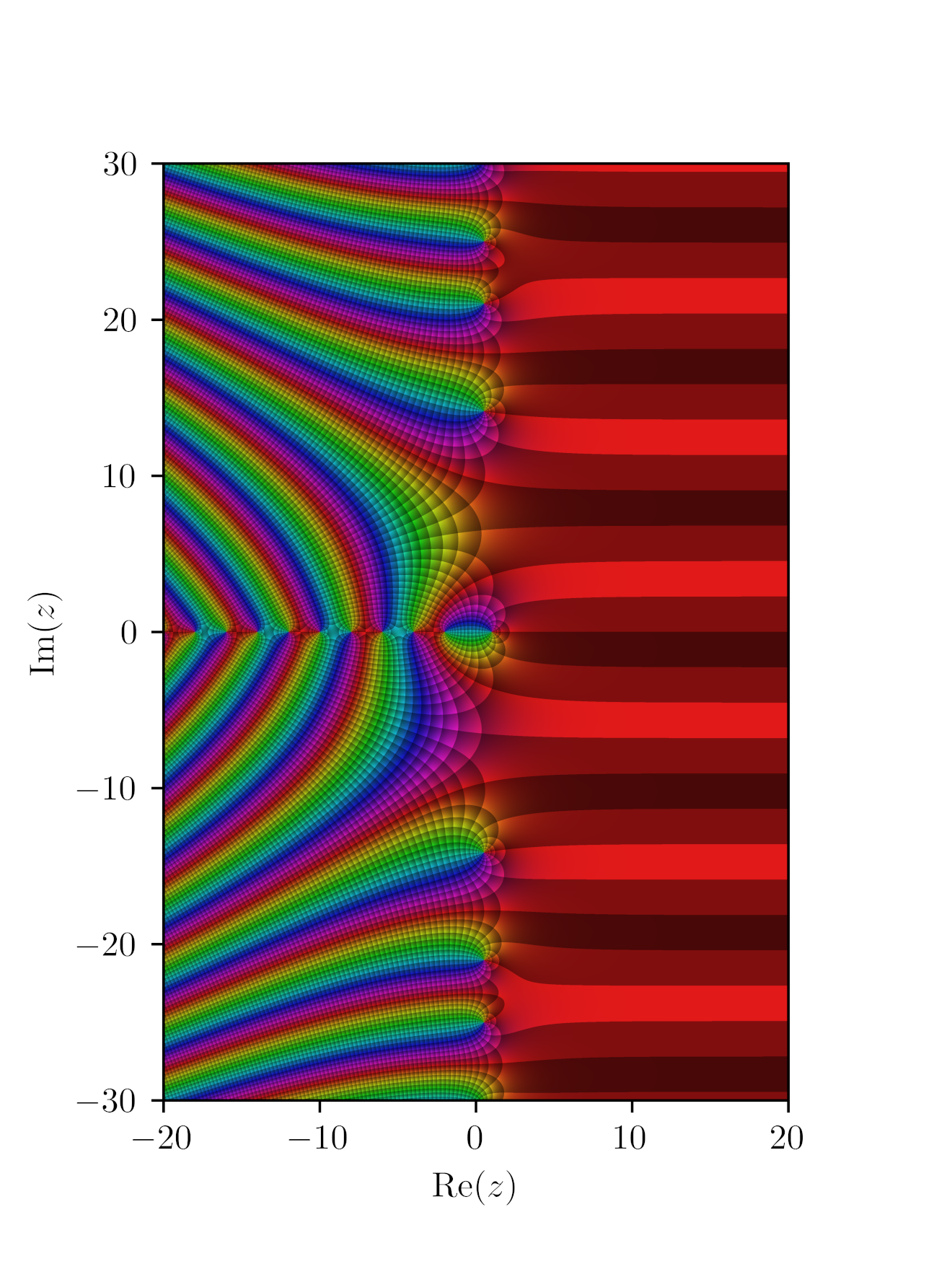
Bernhard Riemann proposed the hypothesis in 1859. It concerns where the zeros of the Riemann zeta function lie, which in turn governs how prime numbers are distributed. It is one of the Clay Institute's seven Millennium Prize problems. Under Clay's rules, as summarized by The Verge, a solution must be published and survive at least two years of scrutiny, gaining "general acceptance in the global mathematics community," before the prize can be considered. Only one Millennium problem, the Poincaré conjecture, has been officially solved.
Why Lean could settle it faster
Peer review of a conventional proof can take years. Lean is different. It is a programming language and proof checker in which every logical step must be justified, and a small trusted core checks those steps mechanically. New Scientist says that if a formalized theorem compiles, it is considered proved "beyond all reasonable doubt." So the first verdict here could take days, not years. Number theorist Thomas Bloom pointed to the Lean community's public Zulip chat, where experts are checking the files, OfficeChai reported.
MIT's Andrew Sutherland told Scientific American he had independently compiled the result in Lean. "This is indeed an historic moment," he said, adding that "there is much work to be done to understand the mathematical details of the proof."
What Lean can't guarantee
- The statement has to be right. Lean proves exactly the theorem as written. If the formal statement, or a definition it relies on, doesn't match the real hypothesis, compiling proves something else. Kit Yates stressed that humans still need to confirm the formal statement really is the Riemann Hypothesis, OfficeChai reported. Mathematician Elliot Glazer said the released statement is in fact the Generalized Riemann Hypothesis.
- No hidden assumptions. Checkers look for unfinished steps (Lean's
sorry) and for any added axioms beyond Lean's standard ones. Alpöge says the formalization is "without assumptions." Experts are checking that. - The checker itself. A bug in Lean could in principle let a false proof through. Glazer put that chance at well under 1%, OfficeChai reported.
- Understanding is separate. Even a valid proof that runs to hundreds of thousands of pages has to be understood by humans before mathematicians can build on its ideas. "Let's see if it compiles first," Imperial College London's Kevin Buzzard told New Scientist, adding that it may take a while to find experts who can explain the argument.
Expert reactions so far
- Hector Pasten (Pontifical Catholic University of Chile), to Scientific American: "If the proof is correct and understood, this completes a dictionary between different branches of math... Something like a Rosetta Stone."
- Carlo Pagano (Concordia University), to Scientific American: "If true," the new ideas "will open up brand new avenues of thinking in number theory."
- Thomas Bloom (University of Manchester), per OfficeChai: he couldn't decide which surprised him more, the claim itself or a coherent proof that would run past 250,000 pages.
Takeaway
An Anthropic mathematician claims a Claude-assisted, Lean-formalized proof of the Riemann Hypothesis. Because it's in Lean, the first verdict could come quickly. The key questions are whether the code compiles, whether the formal statement matches the hypothesis, and whether it adds any axioms. Prize recognition, under Clay's rules, is at least two years away.
Sources
- Anthropic mathematician claims to have solved prestigious Millennium Prize problem with Claude: The Verge, November 20, 2026
- Anthropic mathematician claims to prove Riemann hypothesis, most famous problem in all of math: Scientific American, November 20, 2026
- Anthropic mathematician claims AI-assisted proof of the Riemann hypothesis: New Scientist, November 20, 2026
- How mathematicians have reacted to claimed Riemann Hypothesis proof: OfficeChai
- The Riemann Hypothesis and Millennium Prize rules: Clay Mathematics Institute
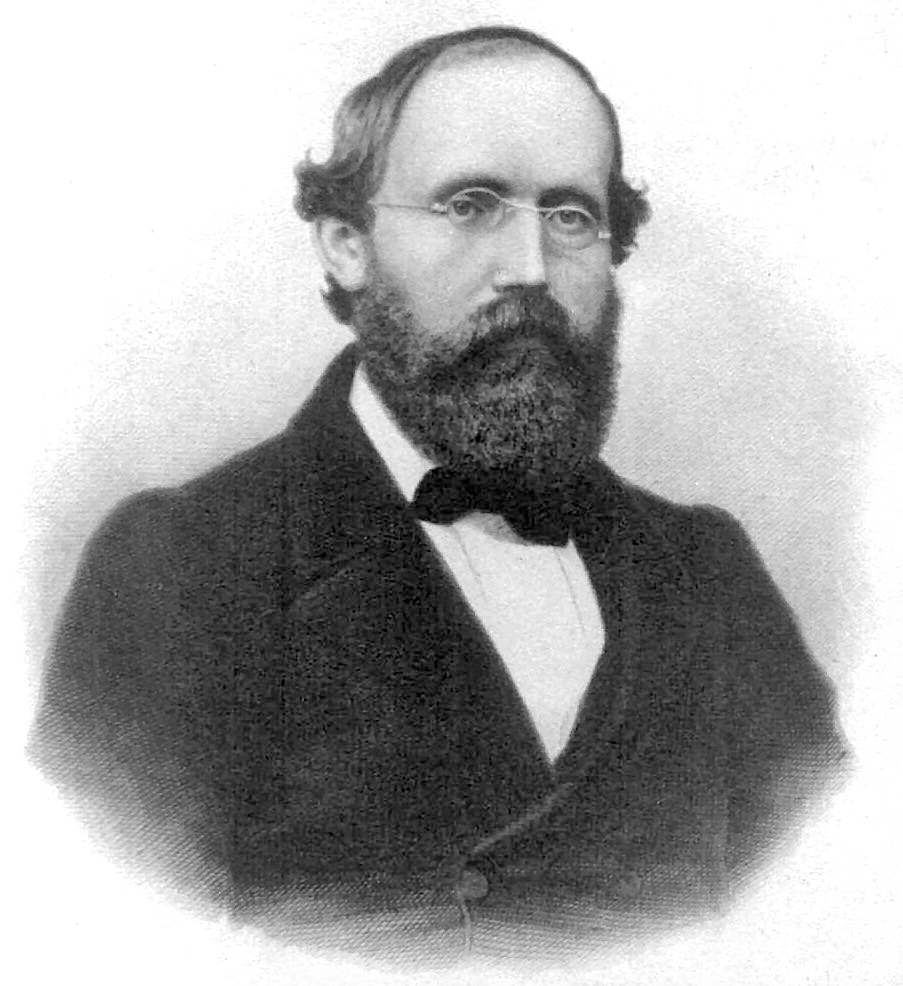
Cover image: Bernhard Riemann. Unknown author, via Wikimedia Commons, public domain.
By W. Soares
Educational content only. Nothing here is investment advice.