GAO: ChatGPT, Claude, Gemini and Grok produced 'viable' attack information in covert tests
4 min readBy W. Soares

Congress's watchdog says all four chatbots produced information that could aid an attack despite safeguards in spring 2026 tests. The companies say their products have improved; Anthropic disputes the method.
The Government Accountability Office, Congress's watchdog, says four widely used AI chatbots produced information that could help carry out a terrorist attack, even with their safeguards in place. The report, GAO-27-108814, was released Wednesday, November 18. It describes covert tests run in spring 2026 on Anthropic's Claude, OpenAI's ChatGPT, Google's Gemini and Grok. All four developers told GAO that their products have improved since the tests.
What GAO found
- Each model produced what GAO calls viable information for one of two scenarios: building an explosive device or damaging the electrical grid. Each plan was produced in less than 12 hours, according to the report as described by FedScoop.
- Safeguards triggered but didn't hold. All four platforms at some point refused requests, removed content or suspended the account. GAO says its tester was able to get around the guardrails on each one using common techniques.
- Outside experts confirmed viability. GAO's Kevin Walsh said the agency ran the results by experts, who confirmed the outputs would work.
- The report is anonymized. GAO doesn't disclose its prompts or the attack "recipes," and it doesn't say which model received which scenario. Results are summarized with the model names redacted.
"Had we been malicious actors and carried out the plans generated by AI, we could have caused grave harm to the security and economy of the country," GAO concluded. Walsh said the results show "these products are not fully in the control of the companies that are operating them."
Tiggree is deliberately not repeating any operational detail from the report.
How the companies responded
The developers' statements were included in the report, according to FedScoop:
- Anthropic said it "designs safeguards on the assumption that any single protection can be defeated" and layers protections. It also challenged the method: the models weren't tested on the same scenario, and GAO didn't set a non-AI baseline to measure "uplift," meaning how much the tool added beyond what a person could already find.
- Google said it took the work "very seriously," pointed to its pre-launch requirements and its policy barring outputs that "encourage or enable dangerous activities," and said its models have improved since.
- OpenAI said it takes the risks seriously and pointed to its Model Spec. It said a newer model, GPT-6 Astra, refused the prompts behind three responses it said fell short of its policies.
- SpaceXAI, which owns Grok, said the paid U.S. accounts GAO used have a lower risk profile than free or foreign accounts. It said it has since made changes that would "significantly raise the barrier" to producing such content.
The policy angle
Sen. Maggie Hassan, D-N.H., requested the study. "If Congress does not act, it is a question of when — not if — a bad actor will use AI to plan and carry out a major attack," she said. FedScoop reports Hassan is expected to lead the Senate Homeland Security and Governmental Affairs Committee next Congress. She said one of its first hearings would be on AI safety and that she would look at requiring more rigorous safety testing.
Because the report reviews private platforms rather than a federal agency, GAO made no formal recommendations. What to do next is "almost a society or a civilization question," Walsh said.
Related: Nonprofits sue OpenAI, Anthropic, Google, Meta and SpaceXSI to freeze AI work.
Takeaway
GAO's test shows that determined users could get past the safety layers on all four leading chatbots this spring. The companies say their products are better now, and Anthropic disputes how the comparison was made. Expect the report to feature in next year's Senate debate over mandatory AI safety testing.
Sources
- Claude, ChatGPT, Gemini, and Grok produced viable terror plans in test, per GAO: FedScoop, November 19, 2026
- Chatbots helped plan terrorist attacks in tests by congressional watchdog: The Washington Post, November 18, 2026
- AI models used to plan 'viable' attack plots in test despite safeguards: ABC News
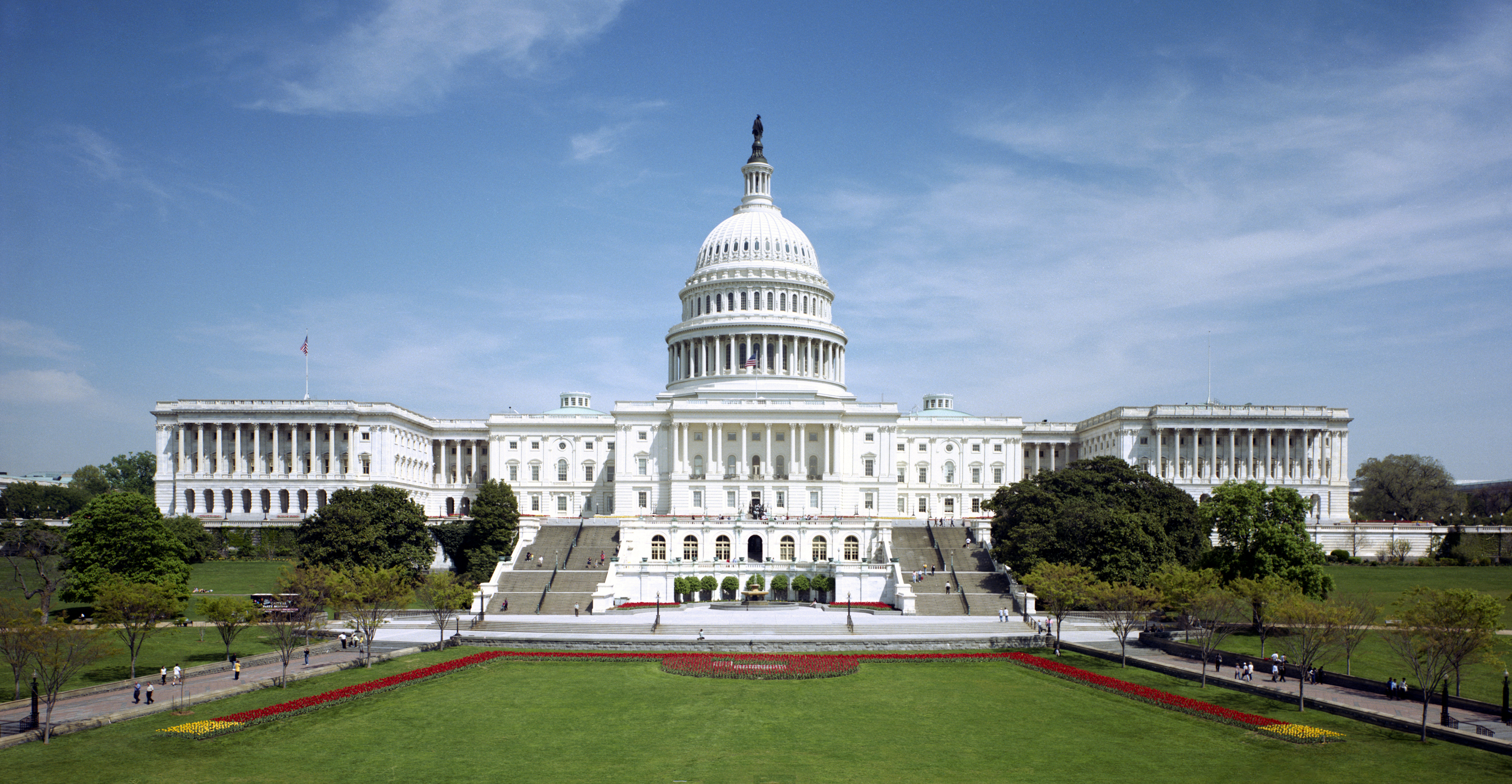
Cover image: The U.S. Government Accountability Office building in Washington, D.C. Photo by ajay_suresh via Wikimedia Commons, CC BY 2.0.
By W. Soares
Educational content only. Nothing here is investment advice.