
House chairmen urge removing Chinese open-weight AI from federal systems: what the report says and an audit checklist
4 min readBy W. Soares
A joint Homeland Security and China Select Committee report urges barring PRC-developed open-weight models from federal systems and high-risk infrastructure, and proposes provenance standards. A checklist for builders.
Two House Republican chairmen want Chinese-developed open-weight AI models out of federal systems and the riskiest parts of U.S. critical infrastructure. On Thursday, November 20, House Homeland Security Chairman Andrew Garbarino (R-N.Y.) and China Select Committee Chairman John Moolenaar (R-Mich.) released a joint investigative report. The Select Committee's release is titled "China is Trying to Get U.S. Companies Addicted to Chinese AI Models." The report makes 12 recommendations, including a U.S. open-weight AI initiative and a model provenance standard.
What the report found
The committees list five findings:
- PRC-developed open-weight models are "already widely used across the American economy," but much of that use is hard to track.
- Cost, customization and near-frontier performance are driving adoption, and the U.S. "lacks a competitive open-weight alternative."
- Much of China's progress "rests on capabilities extracted from American models," the report says, and U.S. data-labeling firms help supply training data.
- Beijing is using open-weight distribution, state support and low prices to expand dependence on its models.
- Risks grow as the models get more capable, and their behavior "can differ in ways ordinary evaluations may not detect."
The investigation began in April 2026 and included correspondence with three U.S. companies, according to the Homeland Security Committee. Airbnb uses Alibaba models in customer support. Anysphere built the flagship model in its Cursor coding platform on a Moonshot AI base model. DoorDash reported that multiple PRC model families had been authorized and deployed. The committees described their discussions with the companies as "productive." Coverage of the report names DeepSeek, Alibaba's Qwen and Moonshot's Kimi as the leading model families.
What they want
- Federal systems: Building on DHS's order excluding DeepSeek from federal civilian systems, prohibit PRC-developed models in federal systems and federal contract work.
- Critical infrastructure: Remove them from high-risk functions, and bar federal cybersecurity grant funds from buying them.
- Provenance: Set a model provenance standard and an "AI bill of materials."
- Build the alternative: Launch a national American open-weight AI initiative and make "trusted American AI the global default."
- Enforcement: Hold "illicit distillers" accountable, examine sales of U.S. training data to PRC labs, and "avoid overregulation."
These are recommendations, not law. Most would need legislation or agency action.
Responses
Airbnb, DoorDash and Anysphere did not immediately respond to The Record's requests for comment. We found no public response from DeepSeek, Alibaba or Moonshot AI to the report as of Saturday morning. The distillation allegations are the committees' and federal investigators' characterizations, as cited in the report.
Mark Montgomery of the Foundation for Defense of Democracies told The Record that companies "driven by bottom line resource decisions will, as always, ignore security and safety issues in pursuit of a lower front end cost."
Related: DeepSeek's API, web search tools and pricing.
An audit checklist for startups and developers
If you build with open-weight models, these steps give you visibility whatever happens in Congress:
- Inventory. List every model in production and in your vendors' products, including fine-tunes. Note the base model each one was built on, not just its product name.
- Record provenance. For each model, record the developer, license, weights source (for example, the Hugging Face repo and commit hash) and download date. That's the start of an AI bill of materials.
- Map data exposure. Note what each model can see: customer messages, code, personal data, credentials.
- Check contracts. If you sell to federal agencies or critical-infrastructure operators, review whether customers already restrict PRC-developed models. DeepSeek is already excluded from federal civilian systems.
- Self-host and isolate. Running weights on your own infrastructure avoids sending data to a foreign API, but it doesn't remove model-level risk. Restrict outbound network access and tool permissions.
- Test behavior. Run your own red-team and evaluation suite, especially on security-relevant tasks, since the report warns that standard evaluations may miss differences.
- Plan a swap. Keep an abstraction layer so you could replace a model without a rewrite.
Takeaway
The report lays out a detailed congressional case against Chinese open-weight models in U.S. systems. Its practical message for companies is to know which models they run and where those models came from. Whether federal bans follow depends on Congress and the agencies.
Sources
- Chairmen Garbarino, Moolenaar release joint investigative report: House Committee on Homeland Security, November 20, 2026
- China is Trying to Get U.S. Companies Addicted to Chinese AI Models: House Select Committee on the CCP
- US companies' use of Chinese open weight AI draws rebuke from House chairmen: The Record, November 20, 2026
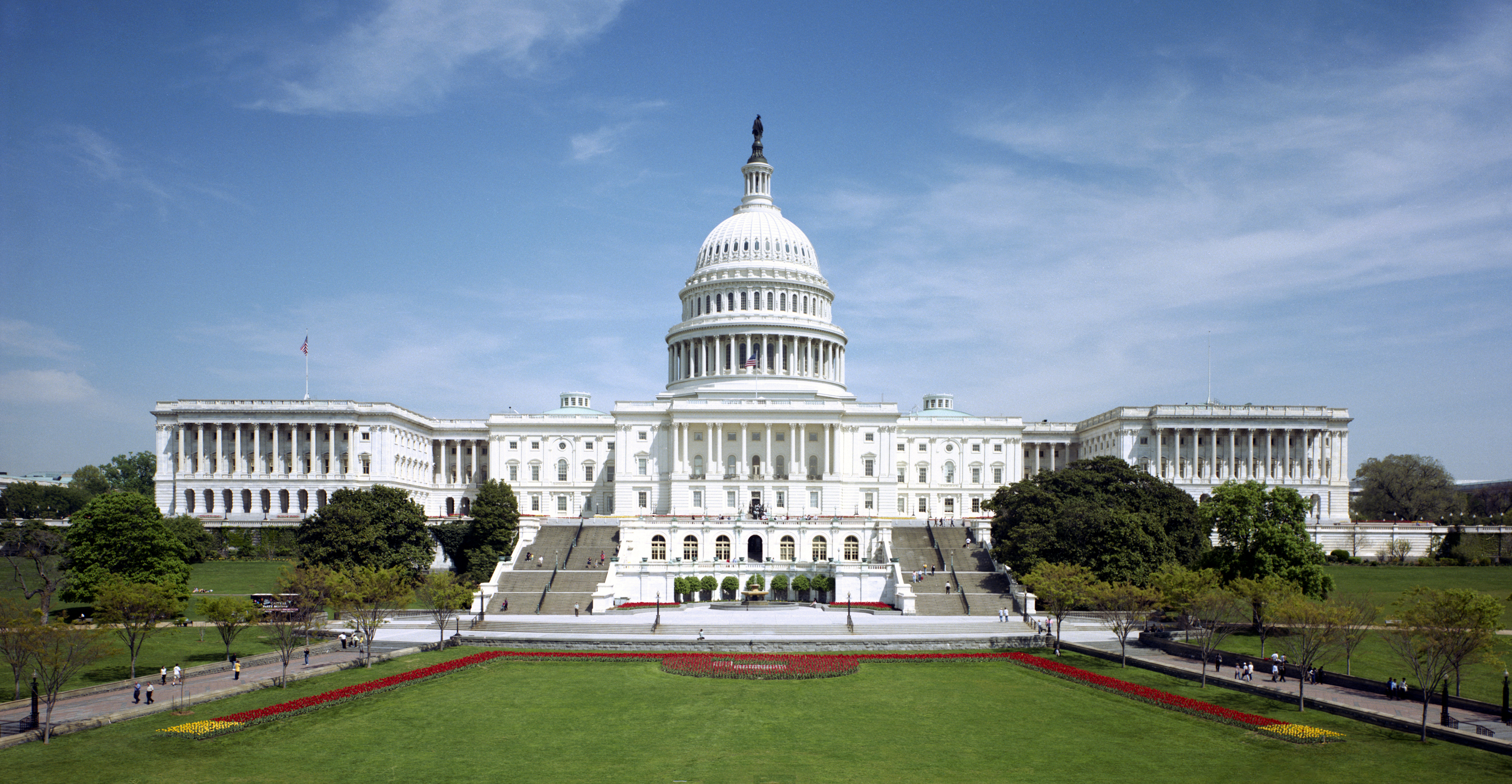
Cover image: The west front of the U.S. Capitol. Architect of the Capitol via Wikimedia Commons, public domain.
By W. Soares
Educational content only. Nothing here is investment advice.


