
Oil extends its slide as Trump says the Iran war could end 'fairly soon'
7 min readBy W. Soares
Brent traded near $90 Tuesday after Trump said the Iran war could end fairly soon. Timed prices, his Qatar remarks, and Iran's denial of talks follow.
Oil prices extended Monday's drop on Tuesday after President Donald Trump said the war with Iran could end "fairly soon" and played down the chance of new U.S. strikes. Brent briefly traded below $90 a barrel, a level Reuters said it had not seen since August 31.
This updates Monday's recap of the slide that accompanied Trump's meeting with Qatar's prime minister. The White House meeting is now followed by on-the-record comments from Trump, a denial from a senior Iranian official that talks are underway, and a fresh set of timed prices.
Where did prices trade on Tuesday morning?
Reuters, in a dispatch republished by Investing.com, said that by 9:30 a.m. GMT (4:30 a.m. ET) on November 10:
- Brent crude futures were down $2.39, or 2.58%, at $90.18 a barrel.
- U.S. West Texas Intermediate futures were down $2.11, or 2.43%, at $84.74.
Reuters said Brent dropped below $90 on Tuesday for the first time since August 31, after settling down 5.85% in the previous session.
CNBC later printed a slightly different snapshot: at 5:33 a.m. ET, Brent was 2.65% lower at $90.14 after January contracts had dipped below $90 earlier in the morning, and WTI was down 2.4% at $84.78. CNBC's headline also said WTI fell to $84.59; the body of that story used the 5:33 a.m. ET print of $84.78.
Monday's settlements, as reported by Reuters and summarized in Tiggree's earlier post, were Brent at $92.57, down 5.85%, and WTI at $86.85, down 4.38%.
Intraday quotes move quickly. The figures above are labeled with the time each outlet cited.
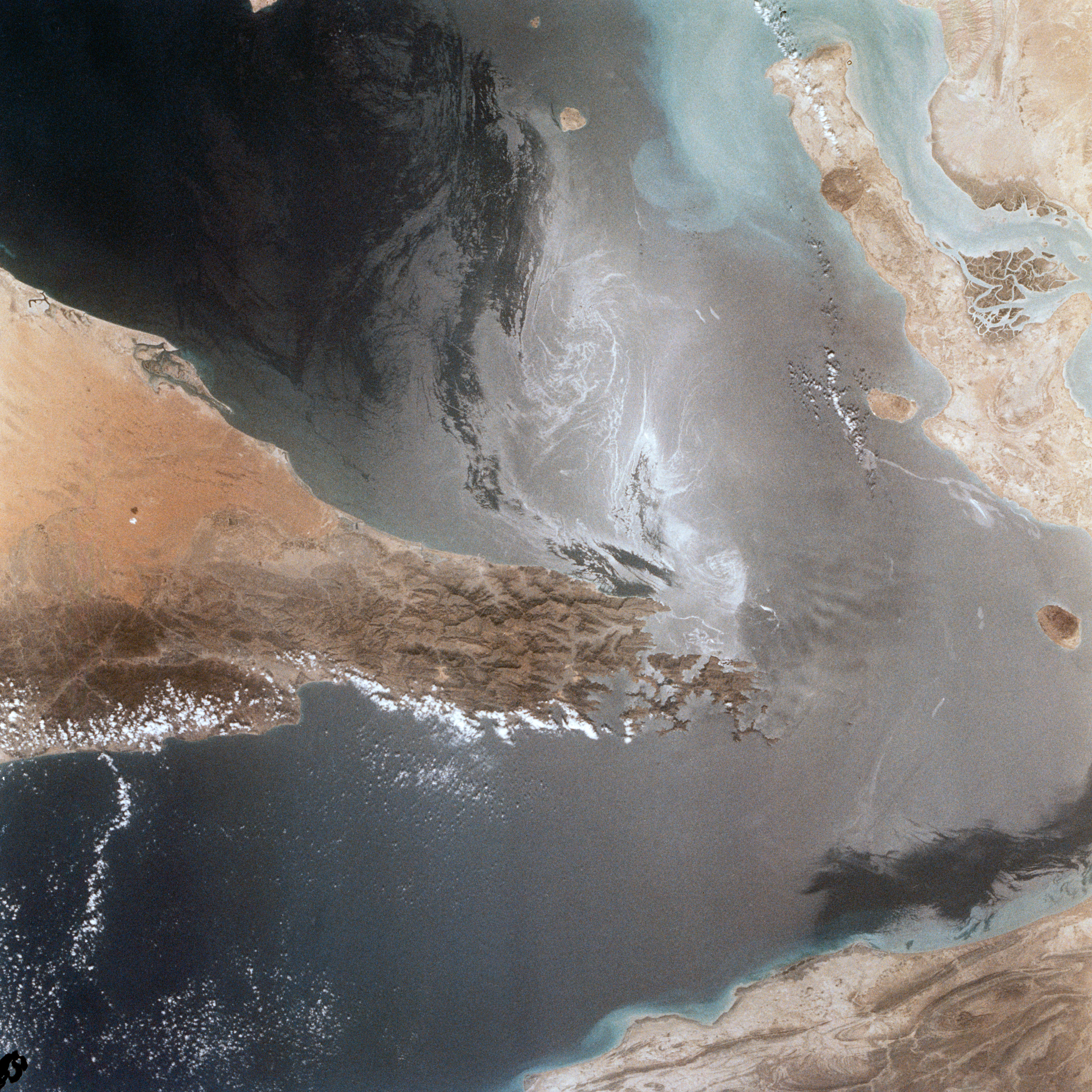
Image: The Strait of Hormuz, photographed from space. Shipping through the waterway remains a swing factor for crude. — NASA via Wikimedia Commons, public domain
What did Trump say after meeting Qatar's prime minister?
Trump spoke to reporters at the White House on Monday after meeting Qatari Prime Minister Sheikh Mohammed bin Abdulrahman Al Thani.
CNBC quoted him as saying: "We're seeing momentum toward the end of this conflict. I think it's going to be ending fairly soon." He also said Iran "militarily is effectively over," citing what he described as the destruction of its navy and surging inflation, and said Tehran was "talking very politely" with Washington.
The BBC quoted him saying, "We're just keeping it the status quo," and that the United States was doing so "really at the behest of countries that are their neighbours." It reported that he called renewed U.S. attacks on Iran "highly unlikely" while saying the United States was "locked and loaded" if circumstances changed. CNBC separately quoted him saying new strikes were "quite unlikely," while adding that "America is 'docked and loaded' and ready to go" — a phrasing that may be a transcription variant of the BBC's "locked and loaded."
CNBC said Trump also wrote on Truth Social that Qatar, Saudi Arabia, the United Arab Emirates, Bahrain, and Kuwait would "prefer the status quo," which he described as maintaining the naval blockade against Iran and "Operation Iron Gate," a task force announced on Saturday and aimed at stopping Iran from moving advanced weapons and other materials by ground.
He reiterated that Iran would not be allowed a nuclear weapon. The BBC reported that when asked why he would not formally declare the war over, he pointed to the need to protect Gulf allies.
On X, the Qatari prime minister said he had held "positive discussions" with Trump and Vice President JD Vance on "reaching a deal and bringing peace to the region," the BBC reported.
A diplomat briefed on the meeting told Axios, as relayed by CNBC, that Trump said he wanted a deal and would give talks a chance, but could reverse course if Iran did not take negotiations seriously.

Image: An oil tanker outside Singapore. Recovering regional crude flows have been cited by analysts as another reason prices have eased. — Flickr user "Thank You (23 Millions+) views" via Wikimedia Commons, CC BY 2.0
What has Iran said? Include the denial.
The status of talks is disputed.
CNBC, citing Reuters, said Iran had put forward a two-day proposal to the United States via Qatari mediators, according to a senior Iranian official, demanding a lifting of sanctions on Tehran and a new shipping route in the Strait of Hormuz. Washington was reviewing the proposal, that report said.
Iranian officials have also said talks are not happening. CNBC reported that Mohsen Rezaei, secretary of Iran's Supreme National Security Council, said Washington should stop "manufacturing fake news about imaginary talks." The BBC wrote more generally that Iranian officials have repeatedly expressed doubts about Trump's prior comments on resolving the conflict.
Those two accounts cannot be blended into a single confirmed negotiation. One attributed official describes a proposal sent through Qatar; another named official calls reports of talks imaginary. Neither claim has been confirmed on the record by the U.S. government in the stories reviewed here.
Monday's separate report of a detailed Hormuz bargain — including a claimed $8 billion unfreezing of funds — remains disputed, as Tiggree noted. A Qatari official told Bloomberg that earlier Israel Hayom account was false.
Why are prices falling if the conflict has not ended?
The war is in its ninth month, CNBC said. Both CNBC and the BBC noted that Republicans lost both chambers of Congress in last week's midterms and that public frustration with the conflict and with high living costs has weighed on the administration's rhetoric.
Reuters said Brent has retreated about 23% from a six-month high of $118 on October 30 as fears of a post-midterm escalation have eased, though shipping-disruption risks remain. It also pointed to signs of excess supply: JPMorgan last week estimated a global surplus of around 1.4 million barrels a day in October, and a Reuters survey found OPEC output rose in October, led by Saudi Arabia, Kuwait, and Iraq.
ING strategists Ewa Manthey and Warren Patterson told CNBC the market has continued to unwind some of the geopolitical risk premium, that regional oil flows are recovering, and that reports Iran may be softening its position on the Strait of Hormuz have reduced fears of a prolonged disruption. They still expect prices to remain sensitive to Middle East headlines.
Not every analyst sees a deal as likely. Fereidun Fesharaki, chairman of FGE, told CNBC's "Squawk Box Asia" on Tuesday that he did not see prospects for a peace agreement, arguing that the United States wants enriched nuclear material transferred out of Iran and an open Hormuz, and that "there is no way the Iranian regime would agree" to those terms.
Tim Waterer of KCM Trade told Reuters the market is prioritizing Trump's more conciliatory tone since the midterms, and that while attacks on shipping around Hormuz are still occurring, they have not forced a fresh risk premium back into the market.
Takeaway
The verified tape is a second session of losses, with Brent near or briefly below $90 in early Tuesday trade, after Trump said an end to the war could come "fairly soon." Iran's government has not confirmed that negotiations are underway; a senior Iranian official called such reports fake.
Takeaway: Price the oil move as a de-escalation trade still in motion, and keep Iran's denial next to any claim that talks have already started.
Sources
- Trump says Iran war to end 'fairly soon,' plays down prospects of new strikes — CNBC, published 1:58 a.m. ET November 10, 2026
- Brent crude falls below $90 for first time since August on Iran war de-escalation hopes — CNBC, 5:33 a.m. ET price stamp, November 10, 2026
- Oil falls below $90 as Trump downplays prospect of escalation with Iran — Reuters via Investing.com, 4:30 a.m. ET (9:30 GMT) price stamp
- Trump says more US attacks on Iran 'highly unlikely' — BBC, November 10, 2026
- Oil slides as Trump meets Qatar's PM on a disputed Hormuz proposal — Tiggree, November 9, 2026
By W. Soares
Educational content only. Nothing here is investment advice.


